How to Start a Dropshipping Business in India in 2026
Dropshipping remains one of the easiest ways to start an online business in 2026. Unlike traditional ecommerce, you don't need to buy inventory upfront, rent a warehouse, or handle packaging and shipping yourself.
When a customer places an order, your supplier ships the product directly to them. Your job is to build the store, attract customers, and provide a great buying experience.
The best part? You can start with very little capital.
In this guide, you'll learn exactly how to start a dropshipping business in India, including how to find products, choose suppliers, build your store, and market it successfully.
What is Dropshipping?
Dropshipping is an ecommerce business model where you sell products without stocking inventory.
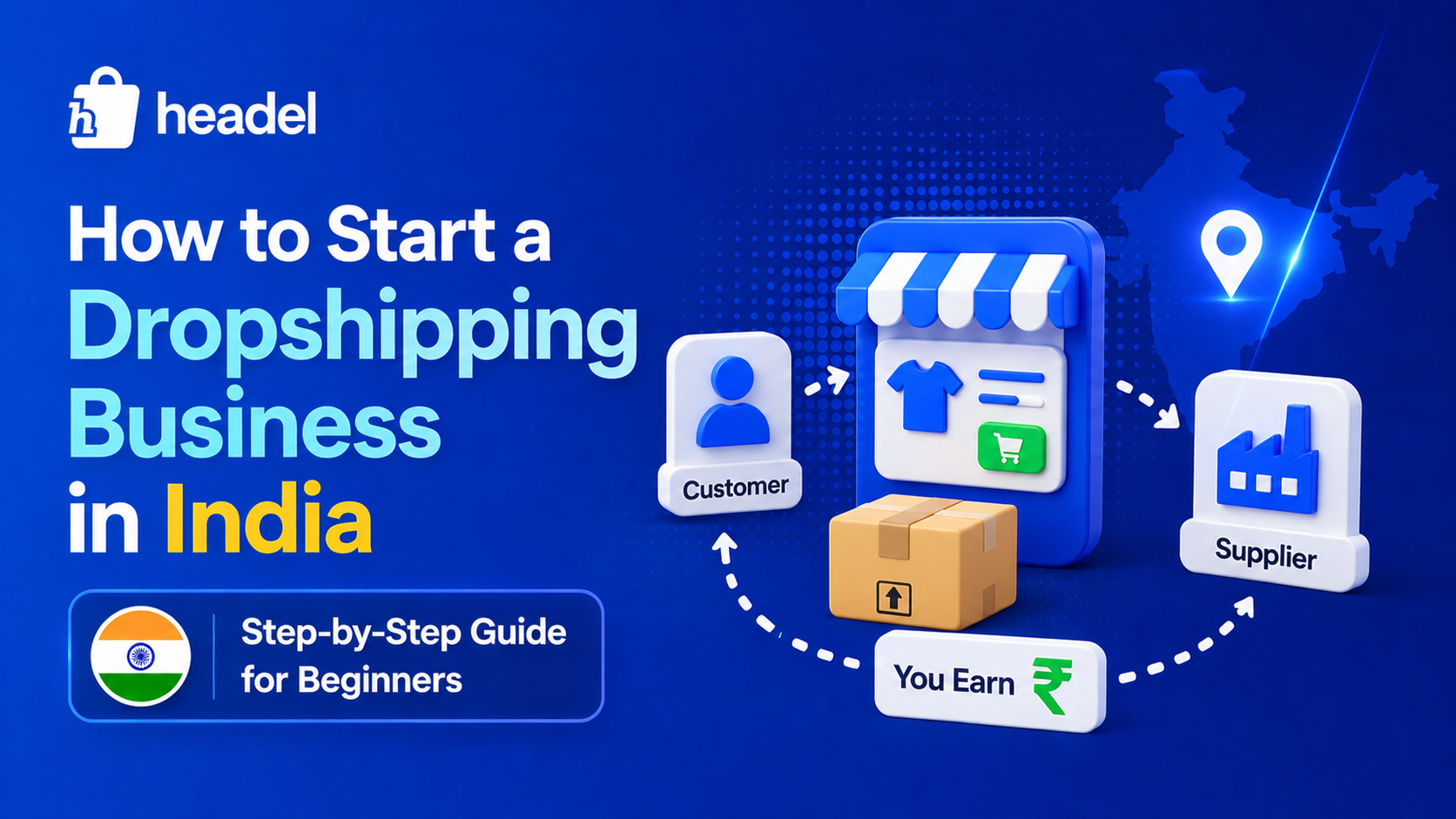
Here's how it works:
- A customer places an order on your online store.
- You forward the order to your supplier.
- The supplier packs and ships the product directly to the customer.
- You keep the difference between the selling price and supplier cost as profit.
For example:
- Product cost from supplier: ₹500
- Selling price on your store: ₹999
- Profit before advertising and fees: ₹499
Because you don't buy inventory upfront, dropshipping has relatively low startup costs compared to traditional retail businesses.
Why Dropshipping is Still Worth Starting in 2026
Despite increasing competition, dropshipping continues to grow because ecommerce itself continues to grow.
Some benefits include:
- Low startup costs
- No inventory management
- Work from anywhere
- Easy to test new products
- Scalable business model
- Ability to launch a store within days
The biggest mistake beginners make is thinking dropshipping is a "get rich quick" business. In reality, successful stores focus on branding, customer experience, marketing, and niche selection.
Step 1: Choose a Profitable Niche
The niche you choose can determine whether your store succeeds or fails. Avoid trying to sell everything. Instead, focus on a specific audience.
Examples include:
- Pet accessories
- Fitness products
- Home organization
- Baby products
- Car accessories
- Beauty products
- Fashion accessories
- Gaming setups
- Print-on-demand apparel
Good niches solve a problem, create emotional appeal, or help customers express their identity.
Step 2: Find Winning Products
Look for products that:
- Solve a clear problem
- Have visual appeal
- Generate impulse purchases
- Can be demonstrated through short videos
- Have healthy profit margins
You can discover products through:
- Instagram Reels
- Facebook Ads Library
- TikTok
- Amazon Best Sellers
- Meesho trending products
- Competitor stores
Avoid products that are fragile, heavily regulated, or already oversaturated.
Step 3: Find Reliable Suppliers
Finding a trustworthy supplier is one of the most important parts of dropshipping.
For Indian Dropshipping
Since AliExpress is no longer a practical option for many Indian sellers, consider local suppliers such as:
Baap Store
A popular Indian dropshipping supplier offering thousands of products across multiple categories.
Benefits include:
- Indian warehouses
- Faster delivery
- COD support
- No inventory requirements
Dropship India Live
Provides supplier connections and dropshipping solutions specifically for Indian ecommerce entrepreneurs.
Meesho
Many entrepreneurs use Meesho suppliers to identify trending products and source inventory directly through the regular app.
For Print-on-Demand Businesses
If you want to sell custom t-shirts, hoodies, mugs, tote bags, or phone cases, print-on-demand is often easier than traditional dropshipping.
Recommended Indian providers:
Printrove
Offers:
- T-shirts
- Hoodies
- Mugs
- Posters
- Automated fulfillment
Qikink
Popular among Indian creators and clothing brands because of:
- White-label shipping
- Branding options
- POD integration
- Nationwide delivery
Many successful Indian apparel brands started using Printrove or Qikink before eventually moving to their own inventory.
Step 4: Build Your Online Store
Most dropshipping guides immediately tell you to use Shopify. While Shopify is a solid platform, it's not the only option available today. Modern ecommerce platforms like Headel now make launching a store much simpler and more affordable.
When choosing a platform, look for:
- Easy setup
- Mobile responsiveness
- Fast checkout
- Payment gateway integrations
- SEO features
- Marketing tools
The goal is to launch quickly and start validating products rather than spending weeks designing a perfect website.
Your store should include:
- Homepage
- Product pages
- About Us page
- Contact page
- Shipping policy
- Refund policy
- Privacy policy
Trust is one of the biggest factors affecting conversions.
Step 5: Set Up Payments
Indian sellers should offer multiple payment options:
- UPI
- Debit cards
- Credit cards
- Net banking
- Wallets
- Cash on Delivery (COD)
The more payment methods you support, the higher your conversion rate will be.
Step 6: Create High-Converting Product Pages
Most beginners simply copy supplier descriptions. This is a mistake.
Instead:
- Write original product descriptions
- Use benefits over features
- Add FAQs
- Include social proof
- Use high-quality images
- Add videos whenever possible
Instead of saying: "5000mAh Power Bank"
Say: "Stay connected all day without searching for a charging point."
Sell outcomes, not specifications.
Step 7: Market Your Store
Even the best store won't make sales without traffic.
Marketing is where successful dropshipping businesses are built.
Instagram Marketing
Instagram remains one of the strongest channels for ecommerce.
Post:
- Reels
- Product demonstrations
- Customer testimonials
- Lifestyle content
- Behind-the-scenes videos
Consistency matters more than perfection.
Aim for daily content.
Facebook and Instagram Ads
Meta Ads continue to be one of the fastest ways to generate sales.
Start with:
- Video creatives
- Interest targeting
- Retargeting campaigns
- Lookalike audiences
Focus on testing products first. Do not spend months trying to perfect your branding before running ads. Launch, test, learn, and improve.
Google Ads
Google Ads capture buyers who are actively searching for products.
Great campaign types include:
- Search Ads
- Shopping Ads
- Performance Max campaigns
Google traffic often converts better because customers already have purchase intent.
Influencer Marketing
Micro-influencers can outperform large creators.
Look for:
- 5,000–50,000 followers
- High engagement rates
- Relevant audience
Often a few free products can generate content that converts better than expensive ad campaigns.
SEO and Content Marketing
Create helpful content around your niche.
Examples:
- Product guides
- Comparison articles
- Buying guides
- Tutorials
SEO can generate free traffic for years after a blog post is published.
Step 8: Focus on Customer Service
Many dropshipping stores fail because they ignore customer support.
Respond quickly to:
- Shipping questions
- Refund requests
- Product issues
Happy customers lead to:
- Repeat purchases
- Positive reviews
- Word-of-mouth referrals
Customer trust becomes a competitive advantage.
Important Considerations for Indian Entrepreneurs
Register Your Business
To operate legally in India, you should register your business and obtain a GSTIN (Goods and Services Tax Identification Number).
This helps with:
- Tax compliance
- Supplier relationships
- Payment gateway approvals
- Business credibility
Offer Cash on Delivery (COD)
A significant percentage of Indian online shoppers still prefer Cash on Delivery.
Ensure your supplier and logistics partners support:
- Pan-India COD
- Return tracking
- COD remittance reporting
Ignoring COD can dramatically reduce sales.
Understand Profit Margins
Margins in India can be tighter because of:
- Intense competition
- Marketplace pricing pressure
- Customer price sensitivity
The solution is not competing on price.
Instead:
- Build a brand
- Choose unique niches
- Improve customer experience
- Create better content than competitors
Common Dropshipping Mistakes to Avoid
- Selling random products
- Choosing unreliable suppliers
- Copying supplier descriptions
- Ignoring customer service
- Running ads without testing creatives
- Quitting too early
- Depending on a single marketing channel
Successful stores treat dropshipping like a real business, not a shortcut to easy money.
Final Thoughts
Dropshipping in 2026 is still one of the fastest ways to enter ecommerce, especially for beginners who want to start with limited capital.
Success comes from choosing the right niche, working with reliable suppliers, building a trustworthy store, and consistently marketing your products.
Whether you're selling trending gadgets, home products, beauty accessories, or launching a print-on-demand clothing brand, the opportunity remains enormous for entrepreneurs willing to put in the work.
Start small, test quickly, learn from customer feedback, and focus on building a brand rather than chasing shortcuts. That's how dropshipping businesses survive and grow in 2026.